Everything a new hire needs: processes, tools, team context, and project history.
Assembled from all your sources. Always current because it updates as the company evolves.

Everything a new hire needs to know.
Company context.
How the company works, what the team structure looks like, what tools are used, and how decisions get made. Assembled from Slack discussions, meetings, and existing content in your workspace. The kind of context that normally takes months to absorb through osmosis.
Project history.
What the team has been working on, what decisions were made along the way, and where things stand now. New hires read project documentation and decision logs that reflect the actual current state, not a snapshot from when someone last updated the onboarding doc.
Role-specific materials.
Engineers get engineering docs covering architecture, systems, and technical decisions. Product people get product docs covering roadmap context and feature history. Sales hires get the sales knowledge base with objection handling and competitive intel. Each function gets onboarding materials assembled from the sources most relevant to their role.
Onboarding that stays current without maintenance.
Updates as the company changes.
Traditional onboarding docs are written once and decay immediately. Fabric's onboarding materials update from the same sources that keep all your documentation current. A process that changed last week is reflected in the onboarding materials this week. A new tool adopted yesterday appears in the onboarding docs today.
No dedicated authoring required.
Nobody needs to sit down and write an onboarding guide. The materials are assembled from documentation that already exists across your workspace, Slack, meetings, and GitHub. If your team has been using self-writing docs, the onboarding materials are a byproduct of documentation you already have.
Grows with the company.
A ten-person startup and a hundred-person company need different onboarding materials. As your team grows and your documentation expands, the onboarding materials naturally become more comprehensive. More projects documented means more project context for new hires. More decisions recorded means a richer picture of how the company thinks.
The onboarding problem that never gets fixed.
Every growing company has the same complaint about onboarding. The docs are outdated. The wiki was last updated six months ago. The onboarding checklist references tools the team stopped using in January. New hires spend their first weeks asking questions that someone already answered but nobody wrote down. Senior team members spend hours every time someone new joins, explaining the same context they explained to the last hire.
The root cause is straightforward. Onboarding documentation requires someone to maintain it, and maintaining it is never anyone's primary job. It is always a side task that gets pushed behind urgent work. The company changes faster than anyone can update the docs. Processes evolve, tools change, team structures shift, and the onboarding guide falls further behind. By the time a new hire reads it, they learn quickly not to trust it, which means they fall back on asking questions and absorbing context through conversation. The onboarding guide becomes a formality rather than a resource.
Onboarding materials assembled from living documentation.
Fabric's approach inverts the problem. Instead of someone writing onboarding docs and trying to keep them updated, onboarding materials are assembled from documentation that updates itself. Your engineering docs stay current because they update from PRs. Your product docs stay current because they update from meetings and Slack. Your decision log stays current because it captures decisions as they happen. Onboarding materials draw from all of these, so they are as current as the rest of your documentation.
A new engineer joining the team reads architecture docs that reflect the merge from yesterday, not the documentation sprint from last quarter. A new product manager reads feature history that includes the decision made in this morning's standup. A new sales rep reads a competitive intelligence profile that includes what a prospect said about a competitor on a call two days ago. The onboarding materials are trustworthy because they are sourced from documentation that is always up to date.
Reducing the cost of every new hire.
The hidden cost of poor onboarding is the time it takes from existing team members. Every question a new hire asks because the docs are outdated is time taken from someone who could be doing their own work. In a startup where everyone is stretched thin, this cost is felt immediately. In a growing company hiring multiple people per month, it compounds into a significant drag on productivity.
Fabric reduces this cost by giving new hires documentation they can actually rely on. Questions that would have gone to a colleague go to the AI assistant instead, which draws from the full documentation set. "How does our authentication system work?" "Why did we choose this framework?" "What is our pricing for enterprise deals?" The answers exist in the documentation because they were captured from the PRs, Slack discussions, and meetings where they were originally discussed.
What gets produced.
Company overview
How the company is structured, what tools are used, how communication works, and how decisions get made. Assembled from team activity across all connected sources.
Team and project context
What each team is working on, what the current priorities are, and what the recent history looks like. Drawn from project documentation, Slack, and meeting activity.
Role-specific documentation
Engineering docs for engineers. Product docs for product managers. Sales knowledge base for sales hires. Client trackers for account managers. Each role gets materials relevant to their function.
Decision history
The decision log gives new hires context about why things are the way they are. Understanding past decisions is as important as understanding the current state.
Recent changelog
The company changelog gives new hires a quick view of what has changed recently. Reading the last month of changes provides a compressed version of what they missed.
Use cases
Engineering onboarding
New engineers read architecture docs assembled from PRs and technical discussions. They understand the codebase, the decisions behind it, and the current state of the systems they will be working on. See how Fabric supports onboarding.
Sales onboarding
New reps read a sales knowledge base assembled from real conversations. Objection handling, competitive intel, and pricing precedents from hundreds of calls are available from day one.
Client team onboarding
Someone taking over a client account inherits a client relationship tracker with full meeting history, decisions, deliverables, and open items. The transition depends on reading, not a verbal handoff.
Company-wide onboarding
New hires in any role get company context, team structure, processes, and decision history assembled from all sources. The materials are comprehensive because they draw from documentation that covers every function.
Perfect for
Startups hiring quickly
Every new hire needs to be productive fast. Self-writing onboarding docs give them accurate materials from day one without anyone stopping their own work to write a guide. Learn more about Fabric for startups.
Agencies with rotating staff
Team members move between client accounts and projects. Onboarding to a new account means reading the client documentation and project history rather than scheduling a handoff meeting. Learn more about Fabric for agencies.
Remote teams
When new hires cannot absorb context through hallway conversations and desk proximity, documentation carries more of the onboarding burden. Self-writing docs ensure that burden is met with accurate, current materials. Learn more about Fabric for teams.
Research teams
New researchers joining an ongoing program need context about previous studies, methodologies, and findings. The research repository gives them the full history without senior researchers spending hours on knowledge transfer. Learn more about Fabric for research teams.
Works seamlessly with other features.
AI assistant
New hires can ask the AI assistant questions about the company, their team, or their projects. It draws from the full documentation set, giving accurate answers with citations. The assistant becomes a patient, always-available onboarding companion.
Smart search
All onboarding materials are searchable alongside the rest of your workspace. New hires can search for specific topics and get results from onboarding docs, engineering docs, product docs, and decision logs in one query.
Collaboration
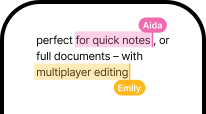
New hires can leave questions and comments on onboarding materials using Fabric's collaboration features. Their questions surface gaps that Fabric can address in future updates.
All self-writing doc types
Onboarding materials are assembled from every other type of self-writing doc. Engineering, product, sales, client, research, and decisions all feed into onboarding. The more complete your documentation, the better your onboarding.
FAQ
Does someone need to write the onboarding docs?
No. Onboarding materials are assembled from documentation that already exists across your workspace and connected sources. If your team has been using self-writing docs, onboarding materials are a byproduct of the documentation you already have.
How do onboarding docs stay current?
They draw from documentation that updates itself. Engineering docs update from PRs. Product docs update from meetings and Slack. Decision logs update as decisions happen. Onboarding materials reflect the latest state because their sources reflect the latest state.
Can I customize onboarding materials by role?
Yes. You can configure which documentation feeds into onboarding materials for different roles. Engineers see technical documentation. Sales hires see the sales knowledge base. Product managers see product docs. Each role gets a tailored onboarding experience.
Can new hires ask questions about the onboarding materials?
Yes. They can leave comments and questions using collaboration features, and they can ask the AI assistant questions that draw from the full documentation set. Both approaches help them get answers without interrupting colleagues.
What if we have not been using self-writing docs yet?
You can produce initial onboarding materials from your existing workspace content including notes, files, recordings, and saved materials. The materials will be less comprehensive than if you have been running self-writing docs across all sources, but they provide a strong starting point.
How does this compare to a traditional onboarding wiki?
A traditional wiki requires someone to write and maintain it. Self-writing onboarding docs are assembled from living documentation and stay current automatically. The difference is that new hires trust the materials because they reflect the current state of the company, not when someone last had time to update the wiki.
Can the new hire's questions improve the docs?
Yes. Questions left on onboarding materials surface gaps that Fabric can identify and address. If multiple new hires ask about a topic that is not well covered, it signals a documentation gap that can be filled from existing sources.
How long does it take a new hire to get through the onboarding docs?
That depends on the scope and the role. Onboarding materials can be structured with essential reading and supplementary reference. The AI assistant is available for specific questions so new hires do not need to read everything sequentially.
Can I track whether a new hire has reviewed the materials?
You can use link analytics to share onboarding materials as tracked links. See when the new hire opened the materials, how long they spent, and which sections they engaged with.
Which plans include onboarding docs?
Self-writing onboarding docs are available on Team plans. See team pricing for details.