Made for Video Editors
Smart media storage for creative professionals
An intelligent filesystem for video and assets.
Your footage, streamed from the cloud in real-time And find anything with AI search.

Trusted by thinkers, creatives, researchers, and problem solvers at














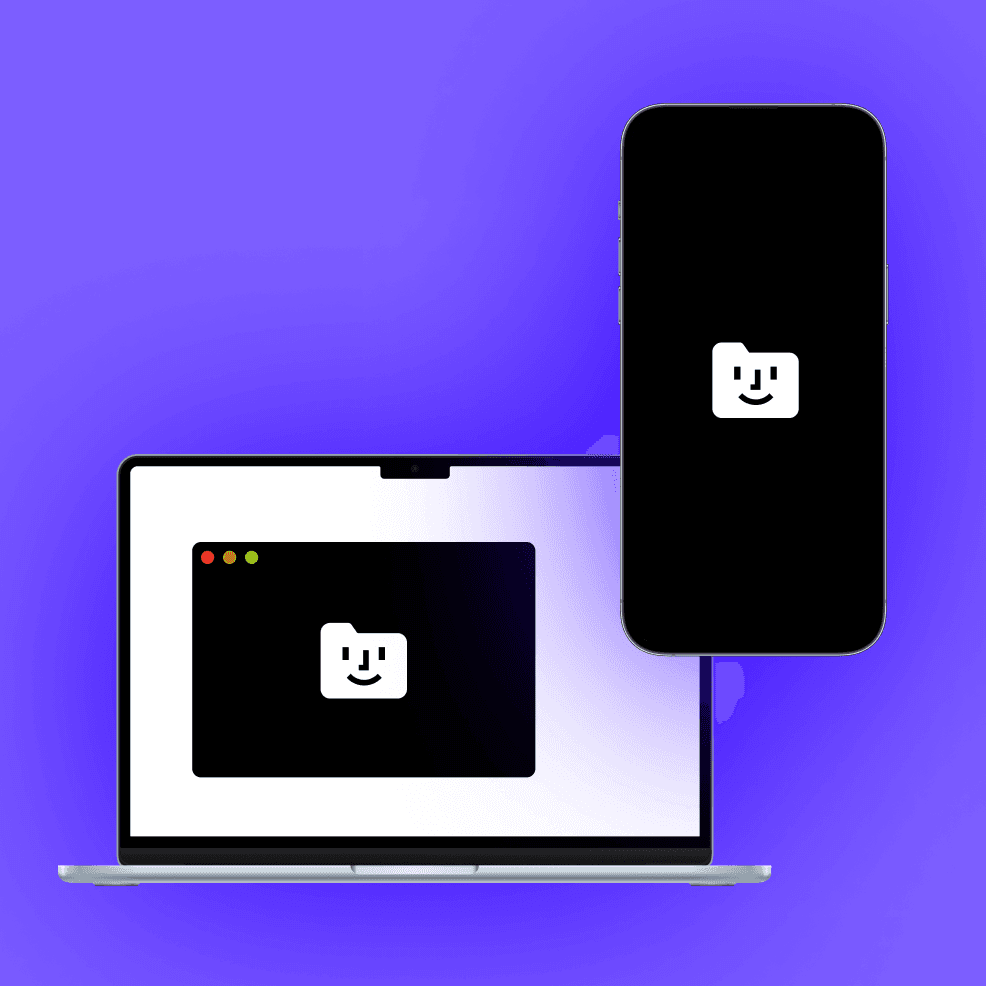

Get unlimited space on your work station with real-time file streaming.
Use the cloud like it's a local drive. All your files, available instantly. Wherever you are.
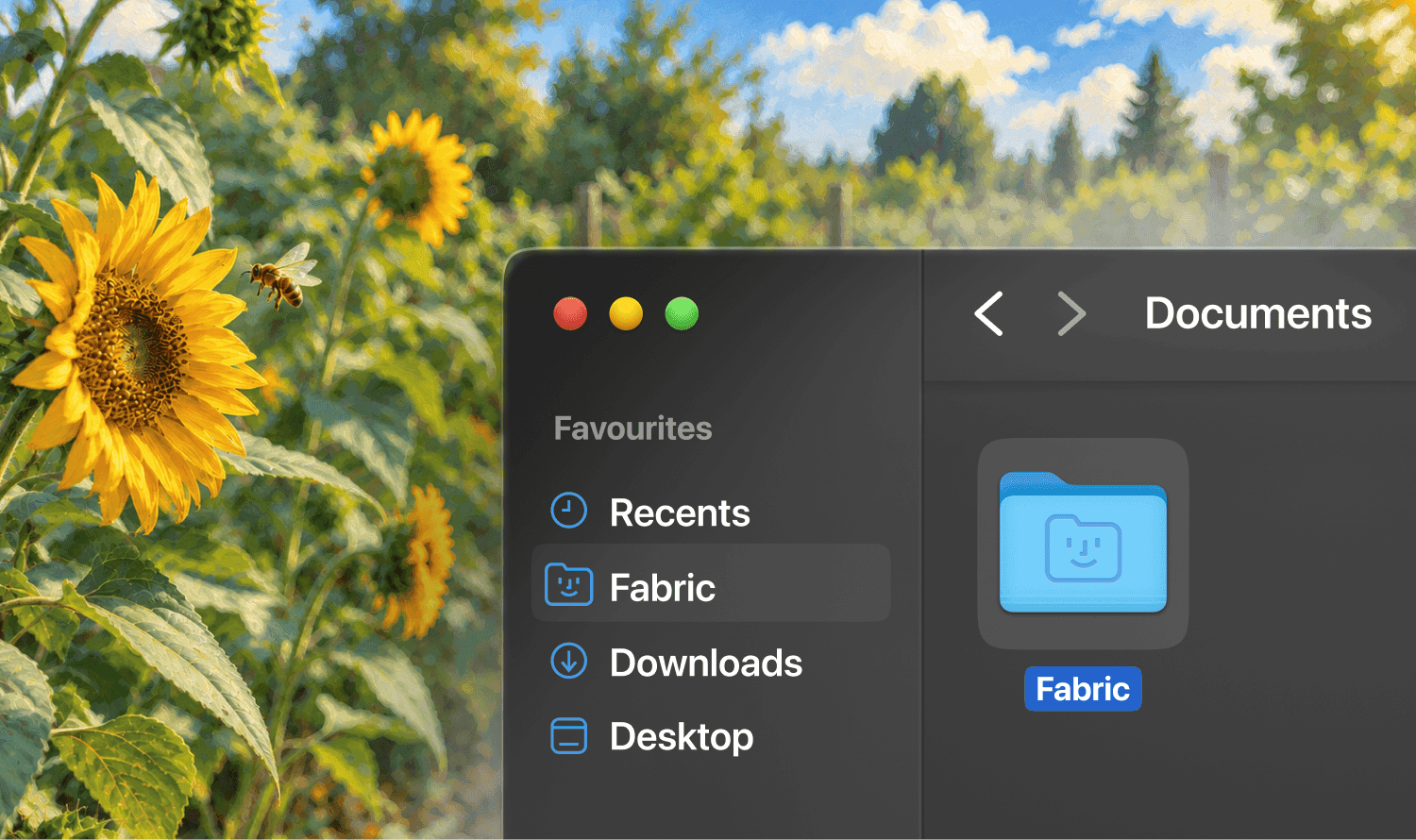


Review, annotate, and approve all in one place
Keep feedback, approvals, and versions together so your team stays aligned from first draft to final sign-off.
Timestamped comments and anchored annotations let you mark the exact moment or spot that needs attention, with no switching between tools.
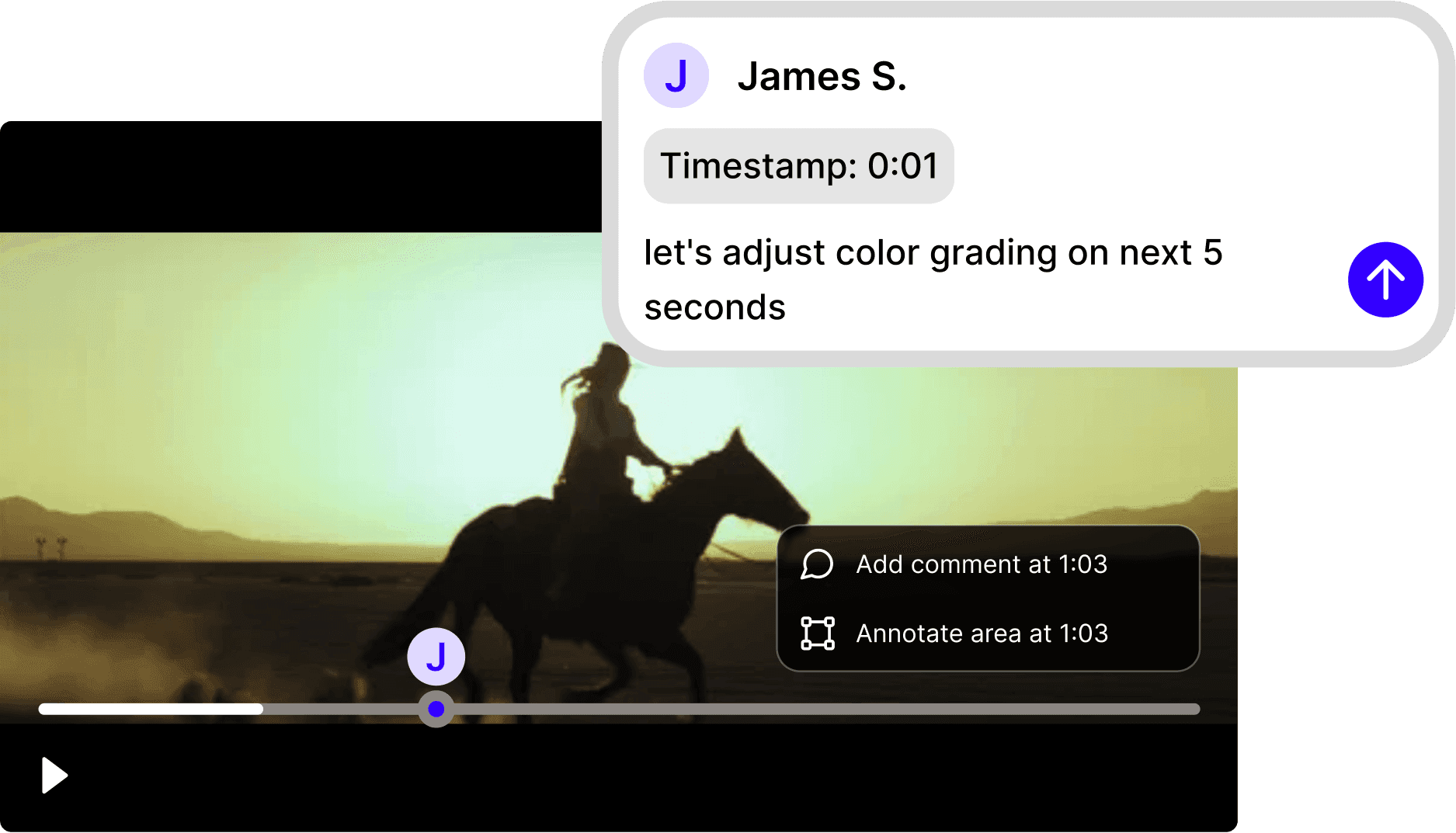
Search your assets with natural language.
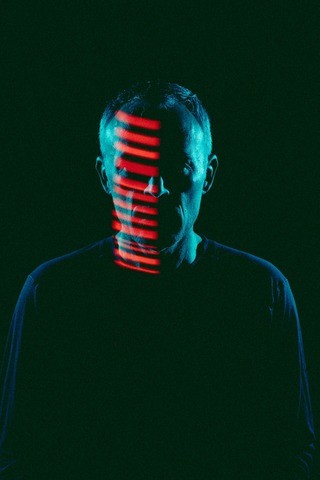
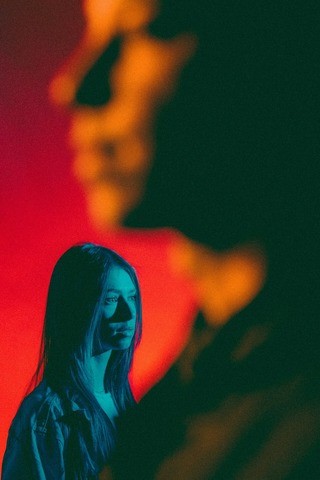
Fabric understands what’s inside your media. Describe a shot, a scene or a color, and find it instantly, with no tags or folders needed. Search reads the text in images, what’s said in videos, and what’s actually in the picture.













Elevate your workflow


Use Fabric from where you already work.
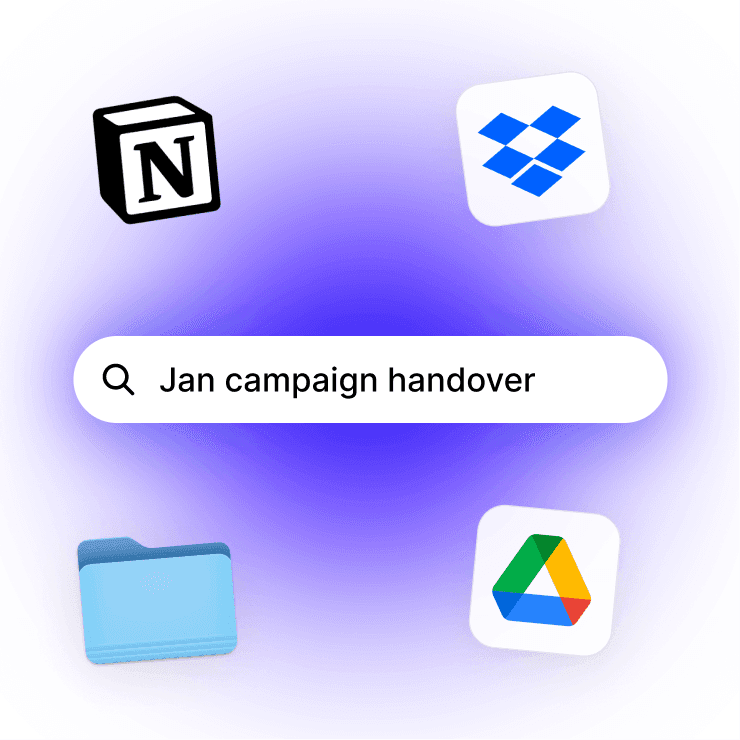
Fabric connects to Google Drive, Dropbox, Notion, Gmail, Slack, and 50+ other apps. Bring in existing project files, reference libraries, and asset folders from wherever they currently live. Connected content becomes searchable alongside everything in Fabric.
The MCP server lets you access your Fabric workspace from any MCP-compatible tool. The API opens programmatic access to search, file management, tagging, and more for custom integrations with your post-production pipeline.


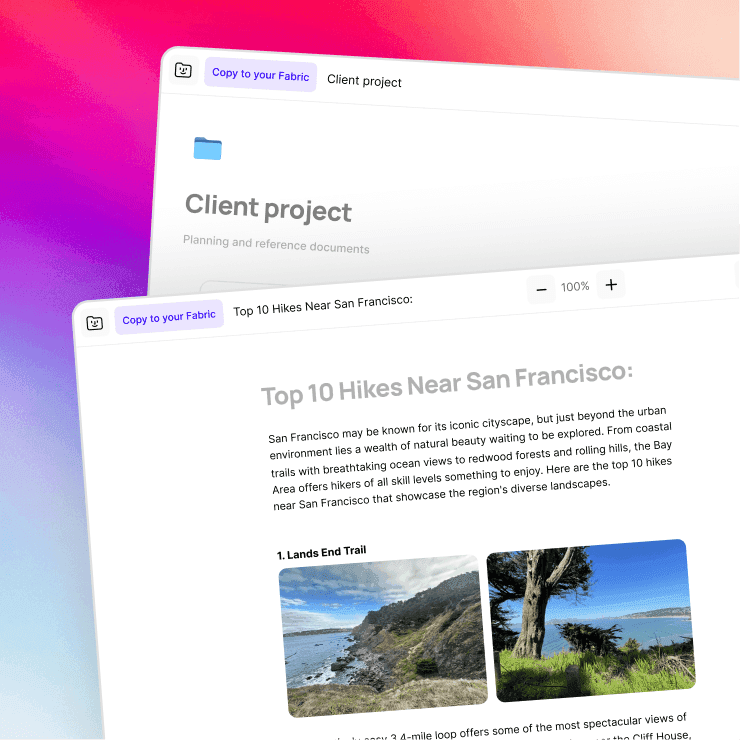
Share beautifully with clients.
Stop sending Google Drive links.

Use cases for video editors
The workflows video editors run in Fabric: building moodboards and reference boards with visual and color search, running design projects from concept through delivery, managing client work with per-project spaces and tracked sharing, review and approval of cuts and deliverables with annotations, content planning for series and multi-video projects, brainstorming concepts on the canvas, capturing meeting notes from production calls, and managing a long-term digital asset library of footage and references.
A video editor's day in Fabric
Morning. You are starting a new brand film. You search your library for "warm, cinematic interview lighting with shallow depth of field" and find reference stills from three past projects plus a saved commercial you bookmarked last year. You drag the best onto a canvas mood board. Every clip is streaming from Infinite Drive, so nothing needs downloading first.
Mid-morning. You are looking for a specific moment in yesterday's interview footage. You search "the part where she talks about moving to Berlin" and the transcription takes you to the exact timestamp. No scrubbing.
Afternoon. The client reviews the latest cut. They leave annotations on the storyboard pinned to specific scenes. You see the feedback in context: "this transition needs to breathe more" is attached to the exact frame, not described in an email.
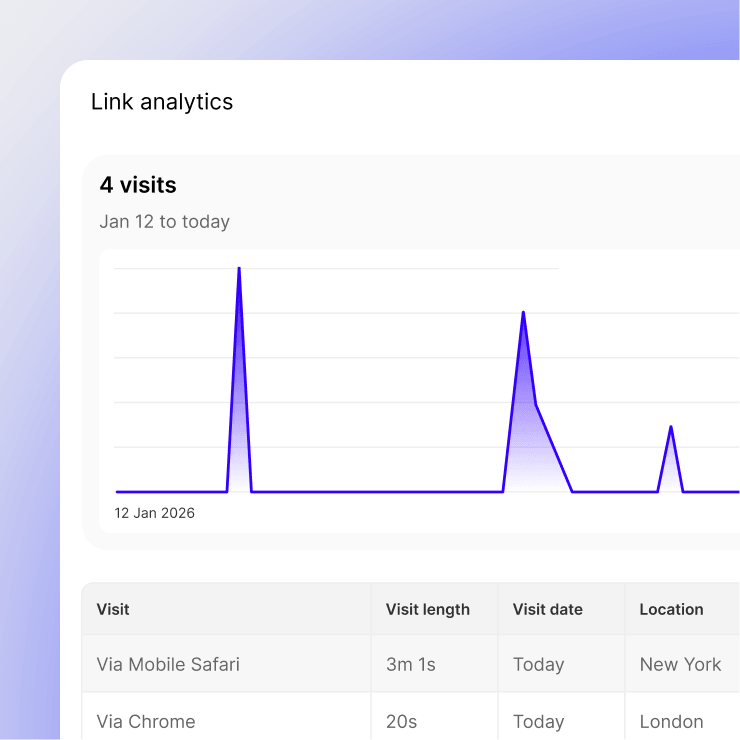
Late afternoon. You publish the revised cut with a tracked link per client contact. The creative director and the brand manager each get their own link. Tomorrow you will see who watched it.
End of day. You save some B-roll stills that caught your eye while editing. They go into your reference library, searchable by visual similarity for the next project that needs something similar. An agent reads the day's production meeting transcript and files the action items as tasks with deadlines.

Get started
Put your footage, references, scripts, and client feedback in one searchable workspace with a cloud drive that replaces your hard drives. Try Fabric free. See pricing for teams.
For creative team workflows, see Fabric for creative teams. For agency-style client management, see Fabric for agencies. For video production agencies, see Fabric for video production agencies. For audio and music production, see Fabric for music creators.
Comparing tools? See how Fabric compares to Frame.io, LucidLink, MASV, and WeTransfer.






















FAQs
What is Infinite Drive and how does it work for video editors?
Infinite Drive is a cloud drive where stored files take zero local disk space. It appears as a mounted drive in Finder or Explorer and streams files on demand in real time. Open a large ProRes or RAW file and it plays with no download wait. Your footage is accessible from any machine without external hard drives, syncing, or file transfers.
Can I edit directly from Infinite Drive?
Infinite Drive streams files on demand in real time, so they open instantly with no download wait, even for demanding work like video editing. Your NLE reads the files from the mounted drive. For the heaviest real-time workflows, you can selectively sync specific project files for local playback while keeping the rest of your library streaming from the cloud.
Does Infinite Drive replace my external hard drives?
For most video editors, yes. Your footage library lives in the cloud and streams on demand. You access the same files from your studio workstation, your laptop on location, or your home setup. No more carrying drives between locations, labelling them, or wondering which drive has which project.
Can I search inside video and audio transcripts?
Yes. Audio and video transcription turns every video and audio file into searchable text. Find a specific moment by searching what was said, without scrubbing through footage. Results link directly to the timecode.
Can I find footage by visual similarity?
Yes. Similar search finds visually similar material across your library. Drop in a frame or a reference image and find everything with a similar look, composition, or color.
Can I search for footage by color or mood?
Yes. AI search finds material by color, visual similarity, and meaning. Describe the mood or visual style in words and find matching references across your library.
Can I build mood reels and reference boards?
Yes. The canvas lets you arrange images, video stills, links, and notes spatially. It supports live embeds from YouTube, Vimeo, and other services, so reference clips play alongside still references.
Can clients leave feedback on cuts and storyboards?
Yes. Annotations let clients pin comments to specific spots on storyboards, scripts, and reference images. Draw on frames to circle specific areas. Leave timestamped comments on video and audio. Feedback is specific and attached to the work, not floating in an email.
Can I share cuts with clients and track who watched?
Yes. Publish with password protection and link analytics. Create named tracking links per client contact and see who watched, when, and for how long.
Can I capture references from my phone on set?
Yes. The mobile app lets you photograph references, record voice notes with automatic transcription, save links, and scan handwritten shot lists. Everything syncs to your project workspace.
Can I use Fabric alongside Premiere, Final Cut, or DaVinci Resolve?
Yes. Fabric is not an editing tool. It is the workspace around the edit: references, scripts, storyboards, client feedback, transcripts, and project assets. Your NLE handles the timeline. Fabric holds everything else, and Infinite Drive streams the footage your NLE reads.
Is my footage and client material secure?
Yes. Fabric uses AES-256 encryption and is CASA Tier 2 compliant. Project material is private by default. Published links can be password-protected for controlled client access. Your data is never used to train AI models.
Can I import existing project files from Google Drive or Dropbox?
Yes. Fabric connects to Google Drive and Dropbox. Bring in existing project files, reference libraries, and asset folders. You can also sync files from your desktop and back up photos from iOS and Android.